Artificial Intelligence of Things (AIoT) is one of the most discussed technologies in digital transformation today.
From smart factories and predictive maintenance to intelligent infrastructure and connected healthcare, the promise of AI + IoT is enormous.
But in real-world deployments, the systems that succeed are rarely the ones with the flashiest algorithms.
They are the ones built on strong architecture, reliable data pipelines, and disciplined execution.
At MetaDesk Global, we’ve observed that scalable AIoT systems are designed intentionally — not assembled from trending tools.
This article explores what organizations must prioritize to move from pilot to production successfully.
AIoT Is More Than Adding AI to IoT
AIoT is not simply about connecting devices and applying machine learning models on top.
True AIoT systems require:
- Clean, structured, real-time data
- Secure and resilient connectivity
- Scalable cloud or edge infrastructure
- Clear business objectives
Without these foundations, AI becomes a demonstration — not a dependable system.
Start With a Focused Pilot
Scaling AIoT should begin with a tightly scoped use case.
Instead of deploying across an entire organization, start by:
- Identifying a measurable operational problem
- Establishing baseline metrics
- Testing under real-world conditions
A structured pilot allows teams to validate value before committing to broader expansion.
Integrate AIoT With Existing Systems
AIoT delivers real value when it connects seamlessly with:
- ERP systems
- CRM platforms
- Operational dashboards
- Cloud infrastructure
Disconnected AI insights cannot drive business decisions.
Integration ensures data flows into workflows.
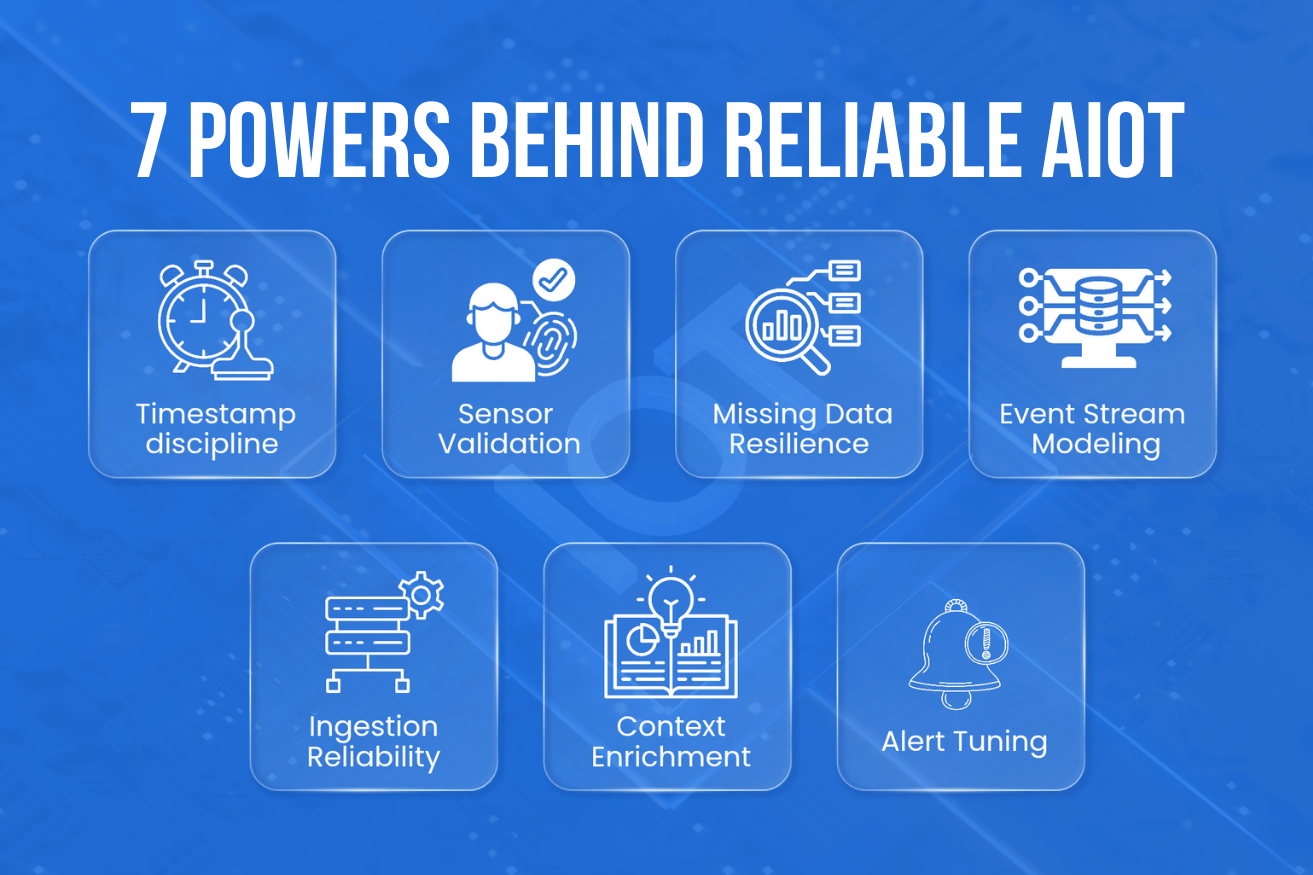
Build Strong Data Foundations
AI models are only as strong as the data they consume.
Key data considerations include:
- Timestamp synchronization
- Sensor validation
- Missing data handling
- Consistent schema design
- Real-time ingestion reliability
Organizations that invest early in data quality reduce long-term risk significantly.
Design for Long-Term Maintenance and Scalability
Connected systems are long-term commitments.
AIoT platforms must account for:
- Firmware updates
- Device provisioning
- Security patches
- Hardware refresh cycles
Planning for maintenance from day one ensures sustainability beyond initial deployment.
Security Must Be Embedded From the Start
Every connected device increases the potential attack surface.
AIoT security should include:
- Encrypted communication
- Secure boot and firmware validation
- Role-based access control (RBAC)
- Device identity and certificate management
Security is not a feature — it is infrastructure.
Choose the Right Connectivity Strategy
Connectivity should match operational requirements.
Options include:
- Wi-Fi for high-bandwidth environments
- LoRaWAN for long-range, low-power systems
- NB-IoT for cellular deployments
- BLE for proximity-based communication
Selecting the wrong protocol can undermine performance and reliability.
Use Edge AI Where It Adds Real Value
Edge intelligence reduces:
- Latency
- Bandwidth consumption
- Cloud dependency
Deploying AI at the edge is especially valuable for time-sensitive systems, such as industrial control or safety monitoring.
Prepare Teams for Organizational Alignment
AIoT projects often require collaboration across:
- IT teams
- Operational technology (OT) teams
- Data engineering teams
- Business leadership
Successful scaling depends on cross-functional alignment and clear ownership.
Measure, Monitor, and Expand Gradually
Scaling should follow validated performance.
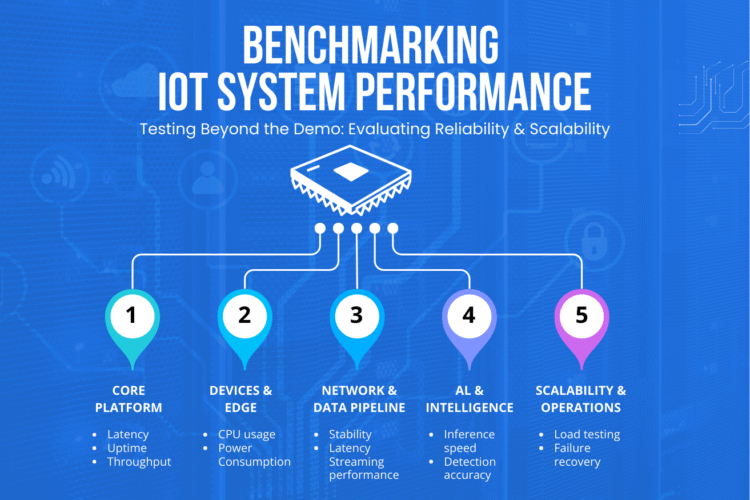
Organizations must monitor:
- Data drift
- System latency
- Model accuracy
- Operational ROI
Expansion should only occur once stability and business value are confirmed.
Why Strategy Outperforms Hype in AIoT
AIoT success does not depend on cutting-edge hardware or complex neural networks alone.
It depends on:
- Trustworthy data pipelines
- Secure and resilient architecture
- Continuous monitoring and feedback
- Clear alignment with business goals
The systems that scale are rarely the loudest — they are the most disciplined.
How MetaDesk Global Helps Organizations Scale AIoT
At MetaDesk Global, we design AIoT architectures that are built for production from day one.
Our approach focuses on:
- End-to-end system design
- Secure device lifecycle management
- Edge and cloud pipeline engineering
- Scalable, observable infrastructure
- Long-term maintainability
We help businesses move beyond proof-of-concept into reliable, scalable AIoT deployments.
Final Thoughts
AIoT has immense potential.
But the organizations that succeed are those who treat it as a systems engineering challenge, not just an AI experiment.
When strong data, disciplined architecture, and strategic planning come together, AIoT moves from hype to measurable impact.