

Designing a Modern IoT System
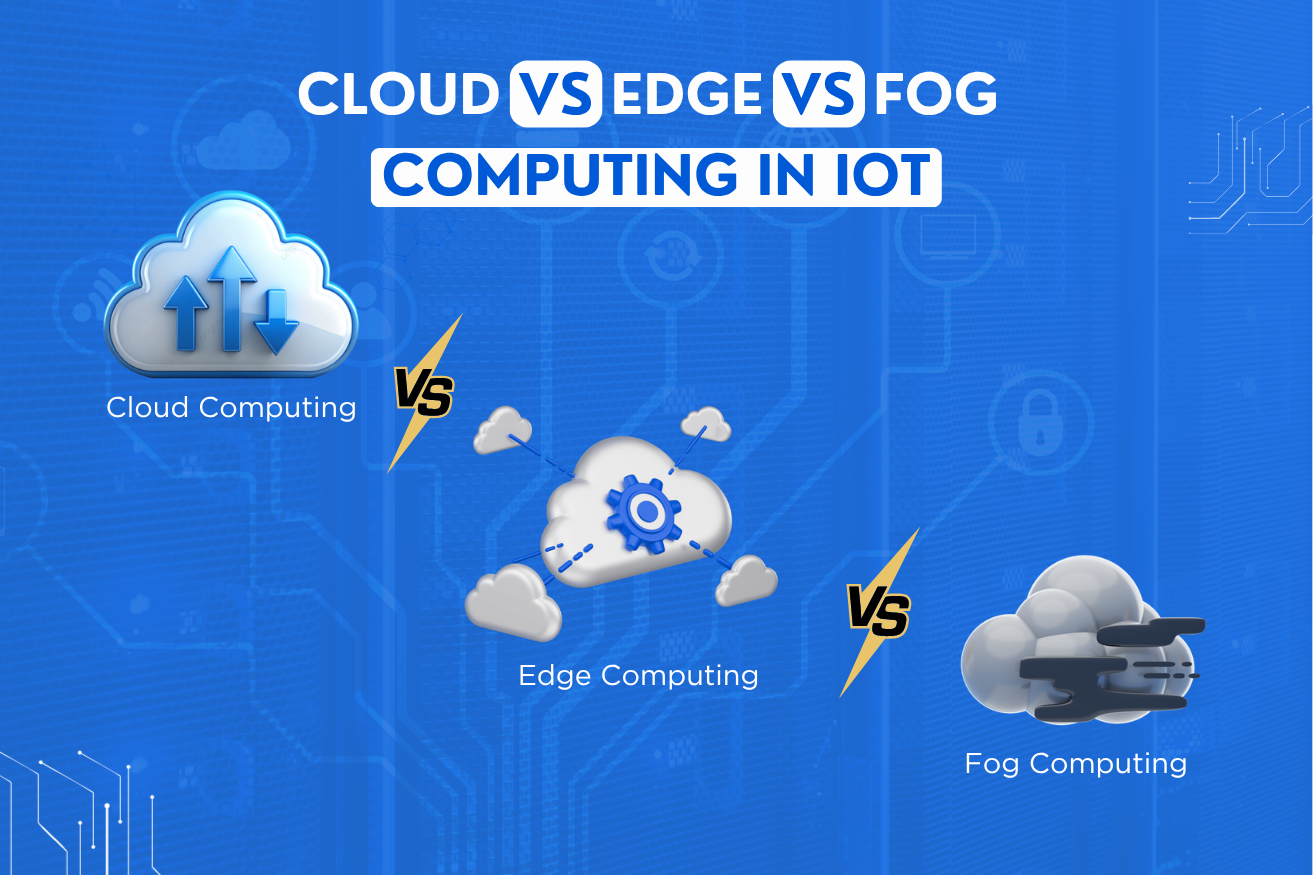
Designing a modern IoT system is no longer just about connecting devices — it’s about choosing the right architecture to process, analyze, and act on data. The decision between cloud computing, edge computing, and fog computing directly impacts performance, cost, scalability, and reliability.
At MetaDesk Global, we’ve seen many companies struggle with this choice. Picking the wrong processing layer often leads to high latency, bandwidth overload, expensive redesigns, and real-world failures.
This guide breaks down each IoT architecture layer, explains when to use it, and shows how combining them creates smarter, more resilient IoT systems.
Why IoT Architecture Matters More Than Ever
The explosion of AI, real-time analytics, and distributed IoT devices has changed how systems must be designed. IoT applications today demand:
- Faster decision-making
- Lower latency
- Better bandwidth efficiency
- Stronger security
- Scalability from prototype to mass deployment
Choosing the right architecture — Cloud, Edge, Fog, or a hybrid — determines whether your IoT product succeeds in real-world conditions.
What Is Cloud Computing in IoT?
Cloud computing refers to centralized processing and storage in remote data centers.
When Cloud Computing Works Best
- Massive data analytics
- AI/ML training
- Long-term database storage
- Multi-region orchestration
- Large fleet management
Cloud platforms like AWS IoT, Azure IoT Hub, and Google Cloud IoT offer enormous processing power and easy global deployments.
Limitations of Cloud Computing in IoT
- High latency
- Dependency on stable connectivity
- Increased bandwidth cost
- Not suitable for real-time decisions
Cloud is powerful — but not enough on its own for fast, safety-critical systems.
What Is Edge Computing in IoT?
Edge computing processes data directly on the IoT device (microcontroller, gateway, nano-PC). This makes it ideal for real-time responses and offline operation.
Benefits of Edge Computing
- Ultra-low latency (sub-millisecond)
- Reduced cloud dependency
- Lower bandwidth usage
- Better privacy and security
- On-device AI processing (TinyML, Edge AI)
Devices like ESP32, ARM Cortex, Raspberry Pi, and NVIDIA Jetson often act as edge nodes.
Where Edge Computing Is Essential
- Wearable devices
- Industrial robots
- Smart cameras & vision systems
- Autonomous machines
- Healthcare monitoring
- Vehicle telematics
If your IoT device must act instantly, edge computing is mandatory.
What Is Fog Computing in IoT?
Fog computing (also called near-edge computing) sits between the cloud and the edge, usually through gateways or local servers.
Key Advantages of Fog Computing
- Near real-time processing
- Data filtering before cloud upload
- Better bandwidth efficiency
- Stronger local security
- Local AI inference and coordination
- Works across large distributed sites
When Fog Computing Fits Best
- Hospitals and healthcare hubs
- Smart city deployments
- Large factories
- Multi-device coordination (100+ sensors)
- Low connectivity or remote environments
Fog bridges the gap between edge speed and cloud power.
Choosing the Right Architecture for Your IoT System
The best IoT architecture depends on:
- Latency requirements
- Device capability
- Connectivity reliability
- Security constraints
- Power limits
- AI processing needs
- Budget and scale
A Simple Rule of Thumb
- Use Cloud for heavy analytics and long-term storage
- Use Edge for real-time decisions and local intelligence
- Use Fog for distributed coordination and bandwidth reduction
The Future Is Hybrid: Cloud + Edge + Fog Together
The most successful IoT systems we build at MetaDesk Global combine all three layers:
- Edge handles instant decisions
- Fog processes local clusters and aggregates data
- Cloud manages AI training, dashboards, and long-term intelligence
This hybrid model improves resilience, reduces cost, and prepares your IoT ecosystem for scaling.
Final Thoughts — Build Smarter, Not Just Connected
The IoT world is shifting from simple device connectivity to intelligent, autonomous systems.
Selecting the right architecture early prevents:
- Redesigns
- User dissatisfaction
- Performance bottlenecks
- Security gaps
At MetaDesk Global, we help companies architect IoT systems that are:
- Fast
- Secure
- Scalable
- Cost-efficient
- Future-ready
If you’re planning a new IoT product or evaluating an existing one, our team can help you design the perfect Cloud–Edge–Fog ecosystem.