

Logo home 9

Over 10 years we helping companies reach their financial and branding goals. Onum is a values-driven SEO agency dedicated.

CONTACTS
Embedded IoT Solutions

The Matter Protocol Explained: What It Standardises and What It Does Not

Category
Embedded IoT Solutions
Read Time
7 min read
Published
November 22, 2024
Status
Published

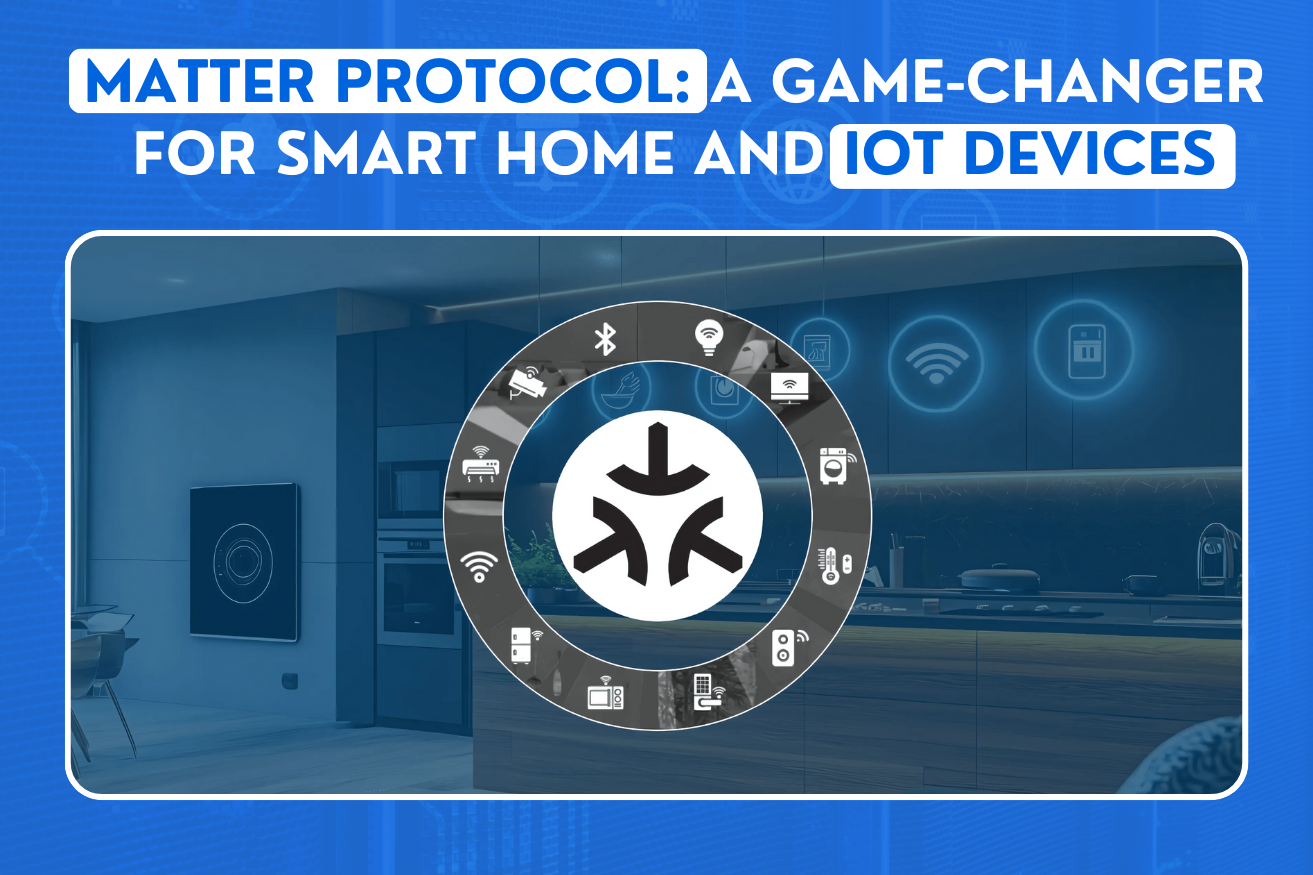
Matter lets a device speak one protocol and work with every major smart home ecosystem. It standardises the meaning of a device, not the radio it talks over.

Matter exists to solve one specific problem: for two decades, buying a smart home device meant first checking which ecosystem it worked with. A bulb that worked with one voice assistant would not work with another, and every manufacturer maintained separate integrations for each platform.

Matter is an application-layer standard that lets a device speak one protocol and work with every major ecosystem at once. It is backed by Apple, Google, Amazon, Samsung and hundreds of manufacturers through the Connectivity Standards Alliance.

This guide explains what Matter actually standardises, how it relates to Thread and Wi-Fi, what it means for product teams, and where its limits currently sit.

Definition

What Matter Is — and What It Is Not

The most common confusion is treating Matter as a radio. It is not. Matter sits above the network layer and defines how devices describe themselves and are controlled.

LayerWhat handles it
Application: device types, commands, stateMatter
Security: certificates, commissioning, encryptionMatter
Networking: IPv6 transportWi-Fi, Thread, or Ethernet
Radio: the physical linkWi-Fi radio, 802.15.4 radio (Thread), or a cable

So a Matter device runs over Wi-Fi, Thread, or Ethernet — Bluetooth LE is used only during commissioning to get the device onto the network. The standard’s contribution is that once connected, a light is a light and a sensor is a sensor to every ecosystem, with no vendor-specific integration.

Matter standardises the meaning of a device, not the radio it uses to talk.

Thread

How Thread Fits In

Thread is a low-power IPv6 mesh network built on 802.15.4 radio — the same physical layer family as Zigbee, but carrying IP natively, which is what makes it usable under Matter.

  • Mesh routing. Mains-powered devices relay traffic, so coverage improves as you add devices rather than depending on one hub’s range.
  • Low power. Battery sensors sleep and wake, reaching multi-year life, which Wi-Fi struggles to match.
  • No single point of failure. The mesh self-heals; there is no one coordinator whose loss takes the network down.
  • Border routers connect the Thread mesh to the home IP network. Many smart speakers and hubs already include one.

The practical division: Wi-Fi for devices with mains power and bandwidth needs such as cameras, Thread for battery sensors, locks and bulbs. Both run Matter, so the choice is an engineering one rather than an ecosystem one.

Value

What Matter Changes for Product Teams

One integration instead of several
Rather than building and maintaining separate certifications and cloud integrations per ecosystem, a device implements Matter once. For small manufacturers this is the difference between supporting one platform and supporting all of them.
Local control by default
Matter operates on the local network, so devices keep working when the internet is down and respond faster. It also means a product does not strictly require a vendor cloud to function.
Security is specified, not optional
Per-device certificates, attested commissioning, and encrypted communication are part of the standard rather than choices each manufacturer makes independently.
Simpler setup
A standard commissioning flow with a QR code replaces each brand’s own app-based onboarding, which is one of the largest sources of consumer support calls.
Differentiation moves up the stack
When connectivity is commoditised, products compete on reliability, sensing quality, and the experience they build on top — not on which ecosystems they happen to support.
Limits

Where Matter Still Falls Short

An honest assessment matters more than enthusiasm when you are choosing a protocol for a product that must ship.

  • Device type coverage is incomplete. The standard defines a growing but finite set of device types. Anything unusual may not have a standard representation yet, forcing vendor-specific extensions that reintroduce the original problem.
  • Advanced features often remain proprietary. A device may expose its basic functions through Matter while its distinctive capabilities still require the manufacturer’s own app.
  • Ecosystem implementations differ. Platforms support different subsets and behave differently in edge cases, so cross-ecosystem testing is still real work.
  • Certification has a cost. Alliance membership and testing are a meaningful overhead for very small manufacturers.
  • It is a consumer and building standard. Matter does not address industrial protocols or wide-area deployments, where OPC UA, MQTT and cellular remain the relevant choices — see IoT connectivity architecture for those.
Decision

Should Your Product Support Matter?

1Yes, if it is a home or building device
Lighting, sensors, locks, thermostats, plugs and blinds are exactly what Matter covers, and buyers increasingly check for it before purchase.
2Choose Thread for battery devices
Multi-year battery life with mesh coverage is what Thread does well. Reserve Wi-Fi for mains-powered products that genuinely need bandwidth.
3Check your device type is defined
Confirm the standard represents what your product does before committing. If it does not, plan for how the gap will be handled.
4Budget flash and RAM realistically
A Matter stack plus Thread is substantially larger than a simple proprietary protocol. Size the microcontroller for it, with headroom for future specification versions.
5Plan OTA from the start
Matter evolves, and certification applies to a version. A reliable update path is what keeps a shipped product compliant and compatible.
6Test on every ecosystem you claim
Certification proves conformance, not that every platform behaves identically. Verify on each one you intend to advertise.
FAQ

Frequently Asked Questions

What is the Matter protocol?
An application-layer smart home standard from the Connectivity Standards Alliance that defines how devices describe themselves, are controlled, and are secured. It lets one device work with Apple, Google, Amazon and Samsung ecosystems without separate vendor integrations.
Is Matter a wireless protocol?
No. Matter runs over existing IPv6 networking — Wi-Fi, Thread, or Ethernet — and uses Bluetooth LE only during commissioning. It standardises device meaning and security, not the radio itself.
What is the difference between Matter and Thread?
Thread is a low-power IPv6 mesh network built on 802.15.4 radio; Matter is the application layer that runs on top of it. Thread moves the packets, Matter defines what they mean. A Matter device can equally use Wi-Fi instead of Thread.
Does Matter work without the internet?
Yes. Matter is designed for local control on the home network, so devices keep responding during an internet outage and react faster than cloud-routed commands. Remote access still requires a connection through an ecosystem hub.
What are the limitations of Matter?
Device type coverage is still incomplete, distinctive product features often remain in the vendor’s own app, ecosystem implementations differ in edge cases, certification has real cost, and it does not address industrial or wide-area IoT at all.
Should an industrial IoT product use Matter?
Generally no. Matter targets homes and buildings. Industrial and wide-area deployments are better served by OPC UA, MQTT, and cellular or LPWAN connectivity, which handle plant protocols, long range, and fleet-scale device management.
Wrapping Up

Conclusion

Matter is a genuine improvement to a problem that held smart homes back for years: it replaces per-ecosystem integration with one standard, specifies security rather than leaving it to each vendor, and keeps control local so products work during an outage.

It is not universal. Device coverage is still filling in, advanced features often stay proprietary, and industrial deployments are outside its scope entirely. For home and building products, supporting Matter is now close to a default expectation; for everything else, the older answers still apply.

Matter is one of many protocols a connected product may use. Our guide to IoT protocols compares Matter, Thread, Zigbee, Bluetooth, MQTT and the rest, layer by layer.

About MetaDesk Global

Engineering the Next Generation of Connected Products

MetaDesk Global helps startups and enterprises develop intelligent connected products that combine embedded systems, Industrial IoT, Edge AI, and cloud technologies. Our expertise includes:

Industrial IoT (IIoT) Solutions Embedded Firmware Development Edge AI Development Predictive Maintenance Systems PCB Design IoT Gateway Development Cloud Integration OTA Firmware Updates AIoT Product Development End-to-End Product Engineering

From hardware design to AI-powered industrial platforms, we build scalable solutions for the next generation of connected products.

Start Your Project

Building a Connected Product?

We design IIoT sensor networks, Edge AI pipelines, and secure cloud platforms — from prototype to production.

Request a Free Quote →