



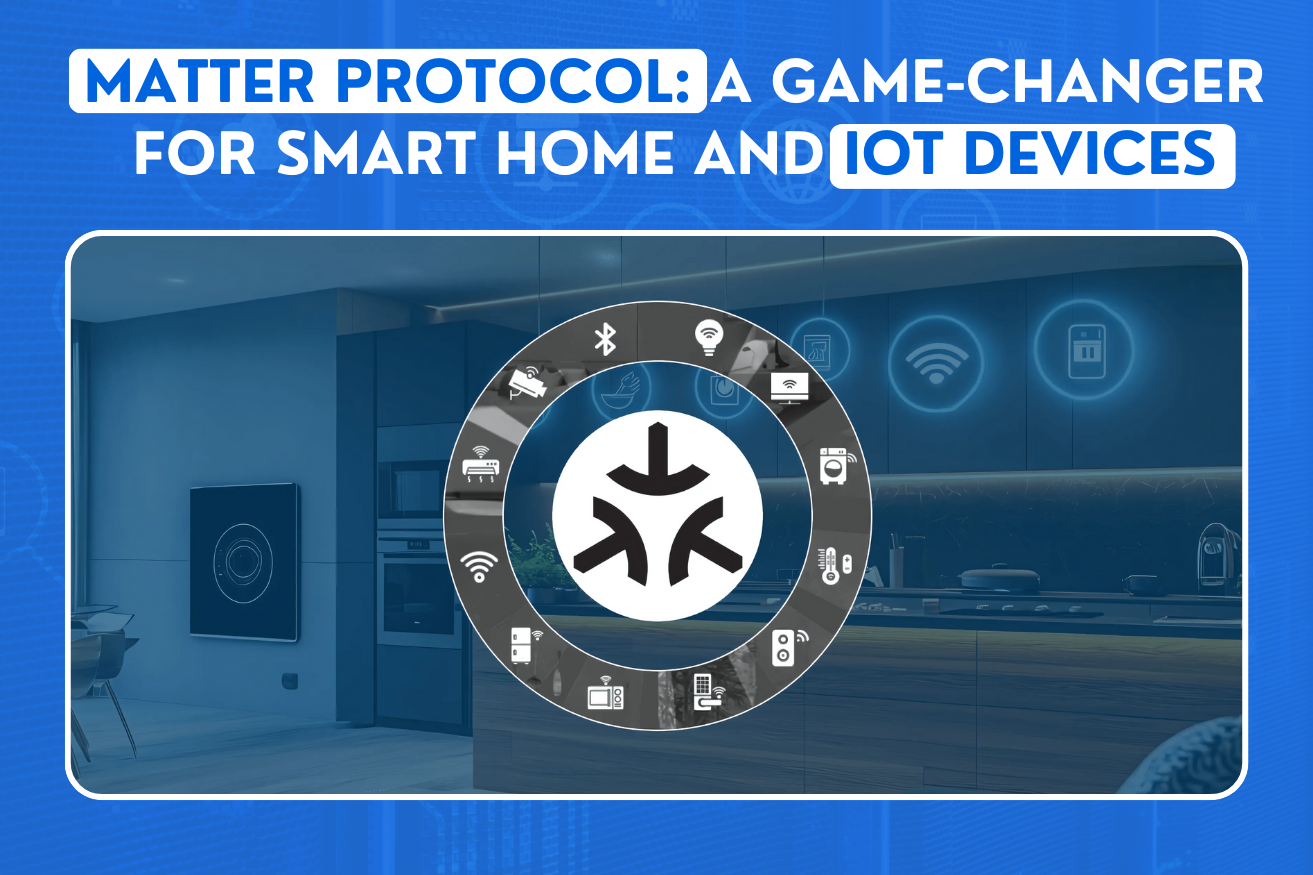
Matter exists to solve one specific problem: for two decades, buying a smart home device meant first checking which ecosystem it worked with. A bulb that worked with one voice assistant would not work with another, and every manufacturer maintained separate integrations for each platform.
Matter is an application-layer standard that lets a device speak one protocol and work with every major ecosystem at once. It is backed by Apple, Google, Amazon, Samsung and hundreds of manufacturers through the Connectivity Standards Alliance.
This guide explains what Matter actually standardises, how it relates to Thread and Wi-Fi, what it means for product teams, and where its limits currently sit.
What Matter Is — and What It Is Not
The most common confusion is treating Matter as a radio. It is not. Matter sits above the network layer and defines how devices describe themselves and are controlled.
| Layer | What handles it |
|---|---|
| Application: device types, commands, state | Matter |
| Security: certificates, commissioning, encryption | Matter |
| Networking: IPv6 transport | Wi-Fi, Thread, or Ethernet |
| Radio: the physical link | Wi-Fi radio, 802.15.4 radio (Thread), or a cable |
So a Matter device runs over Wi-Fi, Thread, or Ethernet — Bluetooth LE is used only during commissioning to get the device onto the network. The standard’s contribution is that once connected, a light is a light and a sensor is a sensor to every ecosystem, with no vendor-specific integration.
Matter standardises the meaning of a device, not the radio it uses to talk.
How Thread Fits In
Thread is a low-power IPv6 mesh network built on 802.15.4 radio — the same physical layer family as Zigbee, but carrying IP natively, which is what makes it usable under Matter.
- Mesh routing. Mains-powered devices relay traffic, so coverage improves as you add devices rather than depending on one hub’s range.
- Low power. Battery sensors sleep and wake, reaching multi-year life, which Wi-Fi struggles to match.
- No single point of failure. The mesh self-heals; there is no one coordinator whose loss takes the network down.
- Border routers connect the Thread mesh to the home IP network. Many smart speakers and hubs already include one.
The practical division: Wi-Fi for devices with mains power and bandwidth needs such as cameras, Thread for battery sensors, locks and bulbs. Both run Matter, so the choice is an engineering one rather than an ecosystem one.
What Matter Changes for Product Teams
Where Matter Still Falls Short
An honest assessment matters more than enthusiasm when you are choosing a protocol for a product that must ship.
- Device type coverage is incomplete. The standard defines a growing but finite set of device types. Anything unusual may not have a standard representation yet, forcing vendor-specific extensions that reintroduce the original problem.
- Advanced features often remain proprietary. A device may expose its basic functions through Matter while its distinctive capabilities still require the manufacturer’s own app.
- Ecosystem implementations differ. Platforms support different subsets and behave differently in edge cases, so cross-ecosystem testing is still real work.
- Certification has a cost. Alliance membership and testing are a meaningful overhead for very small manufacturers.
- It is a consumer and building standard. Matter does not address industrial protocols or wide-area deployments, where OPC UA, MQTT and cellular remain the relevant choices — see IoT connectivity architecture for those.
Should Your Product Support Matter?
Frequently Asked Questions
Conclusion
Matter is a genuine improvement to a problem that held smart homes back for years: it replaces per-ecosystem integration with one standard, specifies security rather than leaving it to each vendor, and keeps control local so products work during an outage.
It is not universal. Device coverage is still filling in, advanced features often stay proprietary, and industrial deployments are outside its scope entirely. For home and building products, supporting Matter is now close to a default expectation; for everything else, the older answers still apply.
Matter is one of many protocols a connected product may use. Our guide to IoT protocols compares Matter, Thread, Zigbee, Bluetooth, MQTT and the rest, layer by layer.