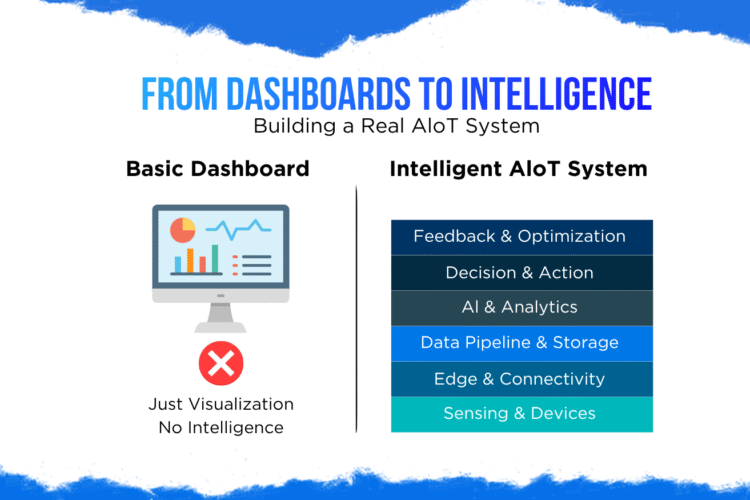
The “edge vs cloud” debate has become one of the most misleading narratives in modern AIoT (Artificial Intelligence of Things).
Many teams approach system design by choosing one side — either pushing everything to the cloud or trying to handle everything at the edge. While this may seem like a strategic decision, it often leads to incomplete architectures, performance bottlenecks, and expensive rework.
In reality, edge and cloud are not competing technologies. They are complementary layers of a unified intelligent system.
This article explains why hybrid AIoT architecture is the only scalable approach — and how leading companies are building it in production.
What is Edge Computing in AIoT?
Edge computing refers to processing data directly on devices or near the data source, such as embedded systems, IoT gateways, or industrial controllers.
Key Benefits of Edge Computing:
- Low Latency: Real-time decision-making without network delays
- Offline Reliability: Continued operation during connectivity loss
- Reduced Bandwidth Usage: Less data sent to the cloud
- Improved Privacy: Sensitive data stays local
In AIoT systems, edge devices are responsible for running inference models, filtering raw sensor data, and triggering immediate actions.
Example Use Cases:
- Industrial machine fault detection
- Smart surveillance systems
- Autonomous robotics
- Wearable health monitoring
What is Cloud Computing in AIoT?
Cloud computing provides centralized infrastructure for storing, processing, and analyzing large-scale data from distributed devices.
Key Benefits of Cloud Computing:
- Scalable Compute Power: Train complex AI models on massive datasets
- Centralized Management: Control thousands of devices from one platform
- Advanced Analytics: Identify trends and optimize operations
- Continuous Deployment: Push updates and improvements globally
In AIoT, the cloud is responsible for model training, fleet coordination, and system-wide intelligence.
Why “Edge vs Cloud” is the Wrong Approach
Treating edge and cloud as alternatives leads to incomplete system design.
If you rely only on the cloud:
- Latency increases
- Systems fail during network outages
- Real-time decisions become unreliable
If you rely only on the edge:
- Models become outdated
- Limited compute restricts intelligence
- No centralized optimization across devices
The result? A system that is neither scalable nor resilient.
The Hybrid AIoT Architecture Model
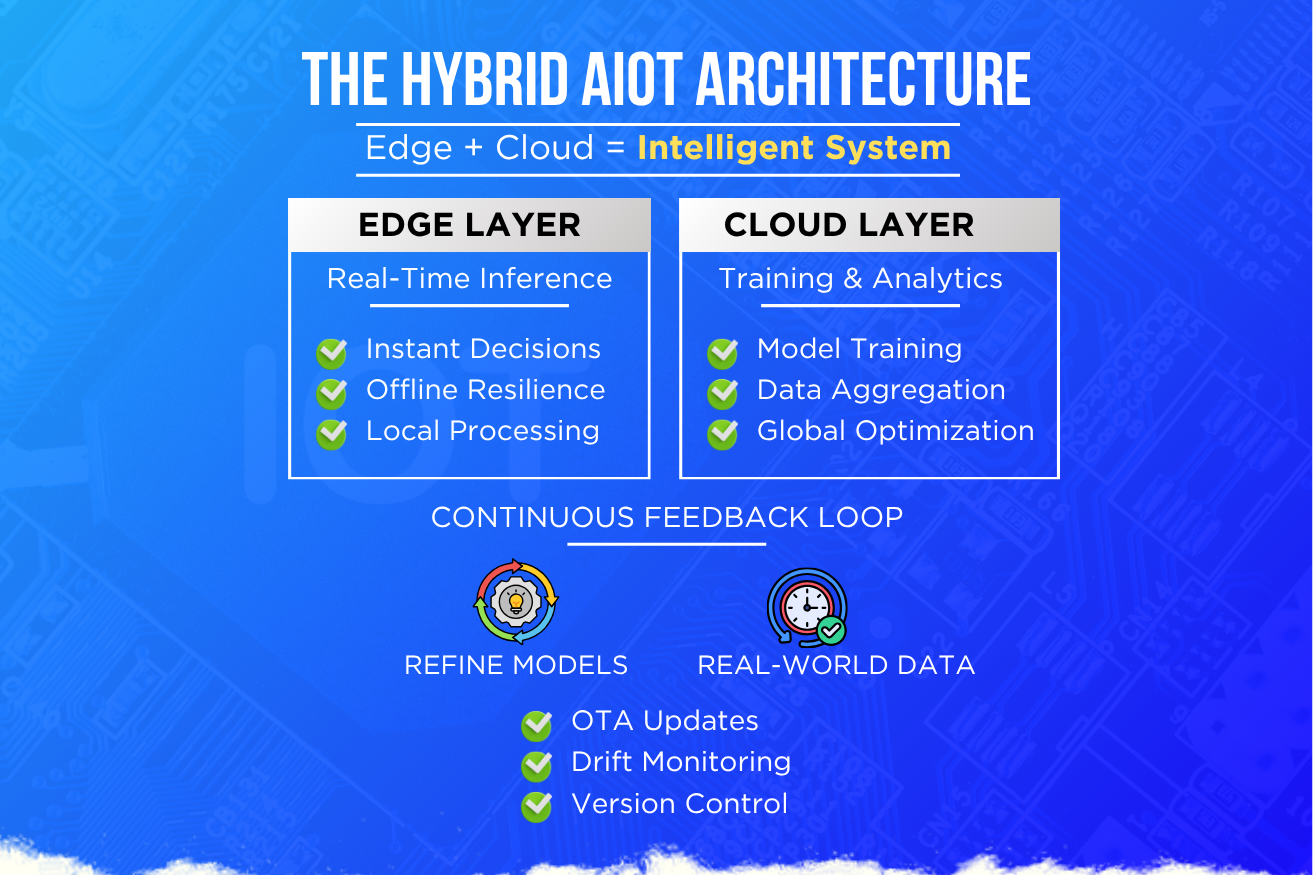
The most successful AIoT deployments use a hybrid architecture, where edge and cloud work together seamlessly.
1. Edge Layer: Real-Time Inference
Edge devices run AI models locally to:
- Process sensor data instantly
- Make time-critical decisions
- Maintain system uptime without cloud dependency
This layer is designed with latency-first and offline-first principles.
2. Cloud Layer: Training and Coordination
The cloud aggregates data from all devices to:
- Train and retrain AI models
- Perform large-scale analytics
- Manage devices and deployments
- Apply security updates and patches
This layer enables global intelligence and scalability.
3. Model Lifecycle Synchronization
One of the most overlooked aspects of AIoT systems is maintaining synchronization between edge and cloud models.
Without proper lifecycle management:
- Edge models become outdated
- Cloud insights lose relevance
- System performance degrades over time
Key Components of Model Lifecycle:
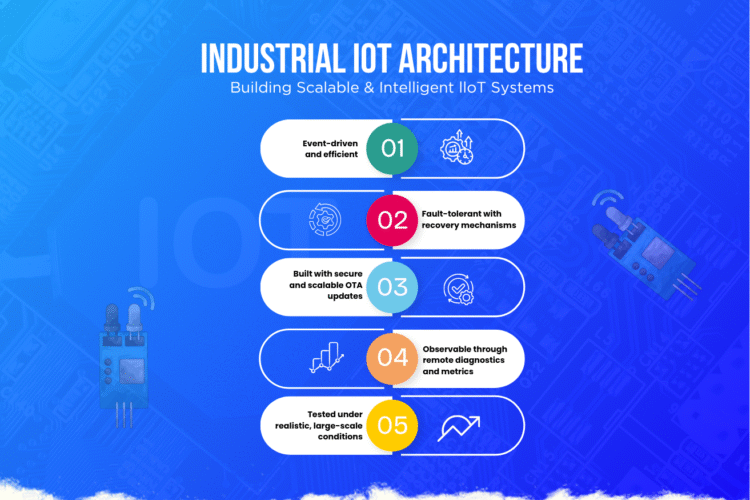
- Version-controlled OTA (Over-the-Air) updates
- Model validation and rollback mechanisms
- Drift detection and monitoring
- Secure firmware and model deployment
4. Continuous Feedback Loop
The real power of AIoT lies in the feedback loop between edge and cloud:
- Edge devices collect real-world data
- Cloud systems analyze and refine models
- Updated models are deployed back to devices
- Devices operate with improved intelligence
This cycle enables continuous system improvement without downtime.
Real-World Applications of Hybrid AIoT Systems
Industrial IoT (IIoT)
Predictive maintenance systems use edge devices for real-time monitoring while the cloud analyzes long-term trends across factories.
Smart Cities
Traffic systems process local signals instantly while centralized platforms optimize city-wide flow.
Healthcare Devices
Wearables detect anomalies locally while cloud systems refine diagnostics using aggregated data.
Autonomous Systems
Robots and vehicles rely on edge inference for instant decisions and cloud updates for improved navigation models.
Best Practices for Building Hybrid AIoT Systems
- Define Clear Layer ResponsibilitiesSeparate real-time edge functions from cloud-based processing.
- Design for Offline-First OperationEnsure devices can function independently when disconnected.
- Implement Secure OTA UpdatesEnable safe and reliable deployment of firmware and AI models.
- Monitor Model PerformanceTrack drift and continuously improve models using real-world data.
- Optimize Data FlowSend only meaningful data to the cloud to reduce cost and latency.
Conclusion: Edge + Cloud = Intelligent Systems
The future of AIoT is not about choosing between edge and cloud.
It’s about designing systems where:
- Edge delivers speed and reliability
- Cloud delivers scale and intelligence
- The architecture connects them seamlessly
Organizations that understand this shift are building systems that are not only functional — but adaptive, resilient, and continuously improving.
About MetaDesk Global
MetaDesk Global specializes in end-to-end AIoT system development — from embedded firmware and hardware design to cloud integration and scalable architectures.
We help companies design production-ready hybrid IoT systems that operate reliably in real-world environments.